Berenger the First
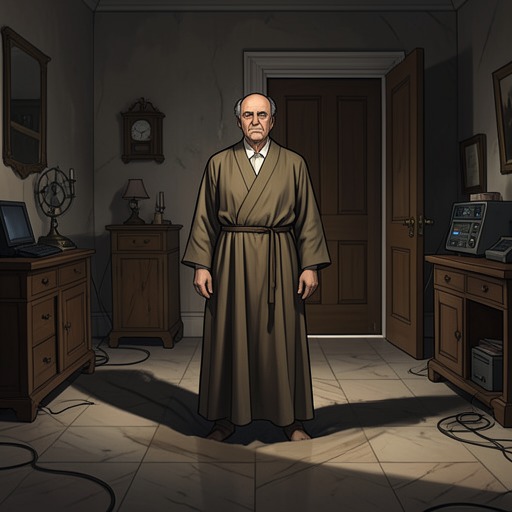
The KillerBerenger the First, identified as the King, is a sovereign whose authority cannot exempt him from mortality. The play makes his approaching death both a fact announced by those around him and a reality he struggles to comprehend. His movement from royal composure toward helplessness culminates in a final stage image in which the king, his throne, and the surrounding room disappear.
Identity and the Announcement of Death
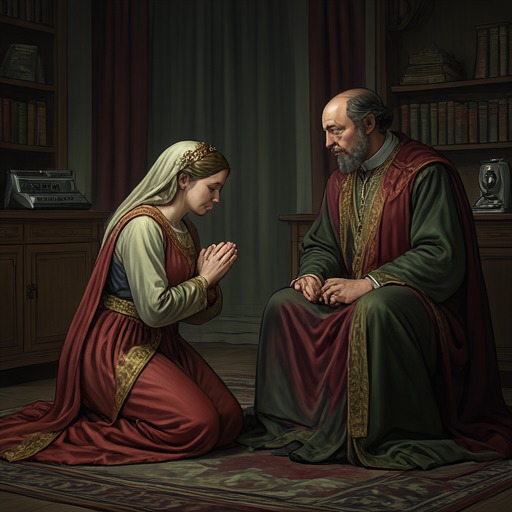
Queen Marguerite states the crisis plainly: Berenger is going to die. The Doctor confirms her news, while Berenger objects that he already knows this and says he can be reminded when the time comes. His response sets knowledge against acceptance: death is not new information, yet he treats its immediate announcement as an unwelcome intrusion into ordinary conversation.
The exchange establishes the limits of his kingship. Berenger remains the person addressed as Majesty, but neither title nor awareness gives him control over what is coming. The announcement turns his impending death into the central fact of the scene, while his attempt to postpone its force shows how far knowing a truth can remain from living through it.
A Childlike Attempt to Begin Again
When Juliette calls him a child, Berenger seizes on the word as if it offered an escape. He asks to start again, to become a baby with Queen Marie as his mother, and imagines that then they will not come for him. He says he has not yet learned reading, writing, and arithmetic, wants to return to school and play with his companions, and asks what two and two make. Juliette answers four; Queen Marguerite reminds him that he knew this already.
The scene gives his resistance a deliberately regressive form. Rather than answering death with royal command, Berenger tries to exchange the identity of king for that of a dependent child, hoping that a new beginning might release him from the approaching end. The simple arithmetic question makes the reversal concrete: he does not lack the knowledge he invokes, but reaches for childhood as an imagined refuge from what he cannot change.
Disappearance and the Final Image
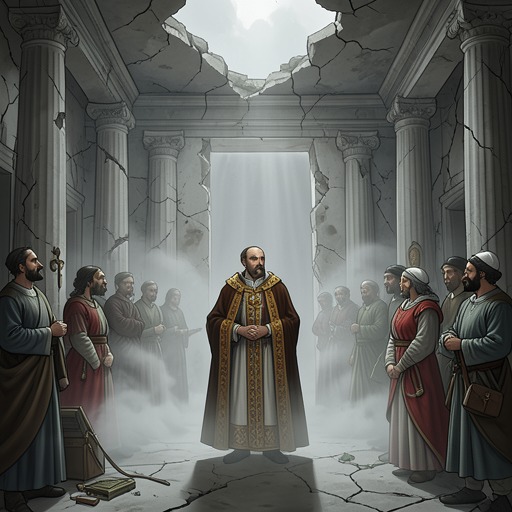
In the final stage sequence, Queen Marguerite suddenly disappears, leaving Berenger seated on his throne. The doors, windows, and walls of the throne room have gradually vanished; then nothing remains onstage except the king and his throne in a grayish light. They, too, disappear, and the gray light is all that remains.
The ending removes, in succession, the queen, the room that framed royal life, and the king with the throne that signified his power. Berenger’s death is thus rendered not through a change of political status or a successor’s arrival, but through the progressive subtraction of the visible world. The sovereign who tried to imagine starting life again ultimately vanishes from the stage, with no setting or possession left around him.